
Mille-Feuille Nabe (ミルフィーユ鍋)
main course · Japanese
Credit: Nami | Just One Cookbook®
A comforting Japanese hot pot of layered napa cabbage and thinly sliced pork belly cooked in a simple dashi-based broth. Serve hot with green onion and shichimi for a cozy meal.
Added Apr 27, 2026
Prep time
20 min
Cook time
15 min
Servings
4 servings
Ingredients
5 cups (about 1.2 L) water
2 packets/boxes dashi stock (instant dashi or dashi sachets)
2 tablespoons sake
1 tablespoon soy sauce
1 teaspoon salt (or 1 tsp salt-and-pepper blend as written)
Ground black pepper, to taste
1 head (1 whole) napa cabbage (Chinese cabbage)
300–400 g thinly sliced pork belly
1 thumb-sized piece fresh ginger, finely chopped or thinly sliced
2–3 green onions (scallions), thinly sliced
Shichimi togarashi (Japanese seven-spice) for serving
Notes
Serving suggestions: Serve with ponzu or sesame (goma) dipping sauce on the side. Variations: you can add mushrooms (shiitake, enoki), tofu, or udon to the pot toward the end to bulk up the meal. Storage: Leftovers can be refrigerated in an airtight container for up to 2–3 days; reheat gently on the stove. If you prefer, increase or decrease the pork amount to taste — a typical amount is 300–400 g thinly sliced pork belly for 3–4 servings.
Preparation
1
In a saucepan, combine 5 cups water and the 2 dashi packets/boxes. Bring to a boil over medium heat.
2
When it reaches a boil, reduce heat slightly (medium–low) and simmer for 2–3 minutes to extract the dashi flavor.
3
Remove and discard the spent dashi packets/solids if using sachets. Add 2 tablespoons sake, 1 tablespoon soy sauce, and 1 teaspoon salt (and ground pepper to taste). Turn off the heat and cover the saucepan to keep the broth hot.
4
While the broth rests, prepare aromatics: finely chop the ginger and thinly slice the green onions.
5
Prepare the napa cabbage: cut the head in half lengthwise, remove the root/core, then cut each half into quarters lengthwise so you have long sections you can separate into leaves. Rinse the leaves and drain thoroughly.
6
Assemble the mille-feuille stacks: lay one cabbage leaf flat and place one slice of pork belly on top. Place another cabbage leaf on top of the pork, then another pork slice, alternating until you have layered several leaves and pork slices (one pork slice between each cabbage leaf). Repeat to make enough stacked rolls to fit your pot.
7
Place the layered cabbage-and-pork stacks upright and tightly packed around the inside edge of a large pot, working toward the center so the stacks lean inward. Pack them snugly; when the pot is full the layers will compress into the simmering broth.
8
If you have remaining layers or want extra aroma, tuck some of the chopped ginger between layers or on top of the stacks.
9
Carefully pour the prepared hot dashi broth into the pot around the stacks (do not pour directly over the top to avoid disturbing the layers). Cover and place over medium heat.
10
When the broth comes to a boil, reduce to medium–low and simmer, covered, until the napa cabbage is tender and the pork is cooked through (pork will take about 8–10 minutes).
11
When done, transfer portions to bowls or a large serving plate. Sprinkle with sliced green onions and shichimi togarashi. Serve immediately with dipping sauces if desired.
Related

Social
Melon Pan (Japanese Melon Bread)
Melon bread with a soft enriched bread base and a crisp, sweet cookie topping — adapted from a short video transcription and clarified for home baking.
Made by Beyond Babish
175 min8-10 buns
dessertJapanese
Social
Oyakodon (Chicken & Egg Rice Bowl)
Simple oyakodon — simmered chicken and onions in a sweet-savory dashi mixture, finished with soft-cooked eggs and served over hot rice.
Made by issagrill
20 min2 servings
main courseJapanese

Social
Crunchy Orc Gyoza
Pan-fried Japanese gyoza filled with ground pork, cabbage and chives — crisped on the bottom and steam-cooked for a juicy interior.
Made by Kojimochi
25 min2 servings (15–20 gyoza)
AppetizerJapanese

Social
Copycat Chick-fil-A Spicy Chicken Sandwich
A homemade version of Chick-fil-A's spicy chicken sandwich: chicken breasts brined in pickle juice and coated in a seasoned flour blend, then fried to a crisp golden exterior.
Made by dishwithdrew
30 min4–6 servings
main courseAmerican

Social
Paprika Chicken and Rice
A quick 30-minute weeknight one-pan of smoked-paprika marinated chicken thighs cooked with aromatic rice, cinnamon and spinach.
Made by andy_cooks
30 min4 servings
main courseMediterranean
Social
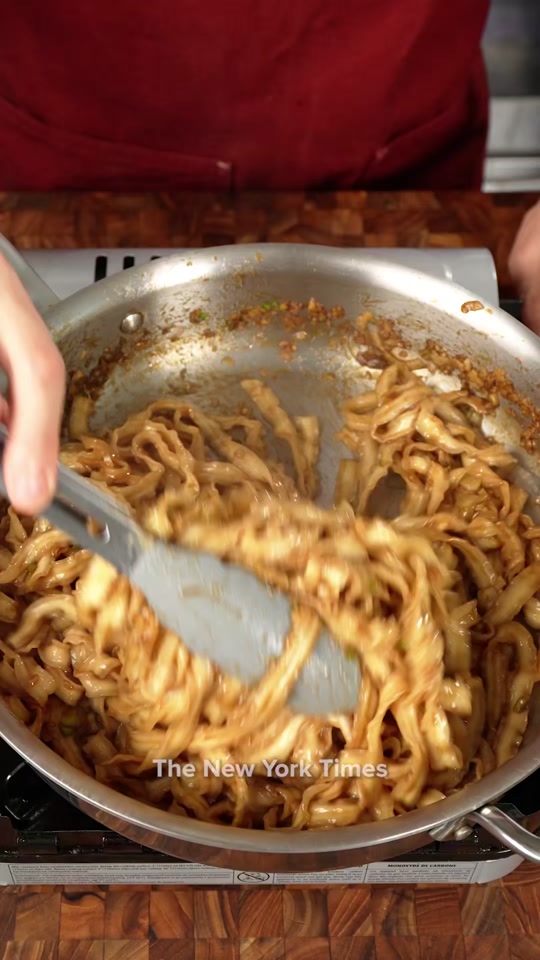
Hoisin Garlic Noodles
Simple, highly rated hoisin-and-garlic noodles (NYT Cooking / Hedy Lou McKinnon) — bouncy noodles tossed in a sweet-savory hoisin sauce and pan-crisped at the end.
Made by foodiligence
25 min4 servings
main courseChinese