
Fresh Spicy Napa Cabbage Kimchi
side dish · Korean
A straightforward homemade kimchi: salted napa cabbage tossed with a spicy, garlicky paste made from blended onion, apple, garlic, ginger, fish sauce and a rice flour porridge for stickiness.
Added Apr 20, 2026
Prep time
90 min
Cook time
10 min
Servings
6-8 servings
Ingredients
1 large napa cabbage (about 2–3 lb)
1/2 cup coarse kosher salt or sea salt (for salting the cabbage)
1 medium onion
1 apple (sweet variety, e.g., Fuji)
8–12 cloves garlic (adjust to taste)
2-inch piece fresh ginger (about 2 tbsp grated)
3 tbsp fish sauce
3/4 cup Korean chili powder (gochugaru) or fine chili powder
1–2 tbsp crushed red pepper flakes (for extra heat, optional)
1/4–1/2 tsp MSG (optional)
2 tbsp sweet rice flour (glutinous rice flour)
1 cup water (for rice flour porridge)
1 small daikon radish, thinly sliced or julienned
1 medium carrot, thinly sliced or julienned
Gloves for mixing (recommended)
Notes
Amounts are scaled for one large napa cabbage; double the recipe for more jars. The rice flour porridge (tteokgaru slurry) helps the paste stick—don’t skip it. Adjust gochugaru and red pepper flakes to control heat level. If you don’t have an apple, a Korean pear or a small ripe pear works well. MSG is optional—omit if you prefer. Store kimchi in the refrigerator; flavor will develop over several days and it can keep refrigerated for weeks to months depending on how fermented you like it. Use clean utensils when removing kimchi to extend shelf life.
Preparation
1
Trim the stem/core of the napa cabbage, cut in half lengthwise, then quarter and chop each quarter into roughly 1-inch wide pieces.
2
Place the chopped cabbage in a large bowl. Sprinkle 1/2 cup coarse salt evenly over the cabbage, then toss thoroughly so the salt contacts every piece. Let the cabbage sit for about 1 hour, tossing/stirring once or twice so it salts evenly.
3
While the cabbage is resting, make the blended kimchi base: in a blender add the onion, apple, garlic, ginger and fish sauce. Blend until smooth; transfer the mixture to a bowl.
4
Make the rice flour porridge: in a small saucepan whisk together 2 tbsp sweet rice flour and 1 cup water over medium heat. Cook, stirring, until it thickens into a loose paste (about 3–5 minutes). Remove from heat and let cool slightly.
5
To the blended onion-apple mixture, add the cooled rice porridge, 3/4 cup gochugaru, 1–2 tbsp red pepper flakes (if using), and 1/4–1/2 tsp MSG (optional). Stir until a thick, cohesive paste forms.
6
Add the thinly sliced daikon and carrot to the paste and mix to combine.
7
Rinse the salted cabbage thoroughly under cold running water to remove excess salt. Taste a leaf to check saltiness—cabbage should be seasoned but not overly salty. Drain and squeeze out as much water as possible.
8
Put on gloves. Add the drained cabbage to a large bowl, then add the kimchi paste. Mix and massage the paste into the cabbage until every piece is well coated.
9
Pack the kimchi tightly into clean jars or an airtight container, pressing down to remove air pockets and leaving about 1–2 inches headspace. Seal.
10
Fermentation: leave the jar at room temperature for 1–2 days to start fermenting (longer if you prefer stronger sourness), then refrigerate to slow fermentation. Taste and refrigerate once it reaches your preferred flavor.
11
Serve fresh kimchi with rice or as a side; enjoy immediately for a crunchy, fresh style or after fermentation for tangier flavor.
Related
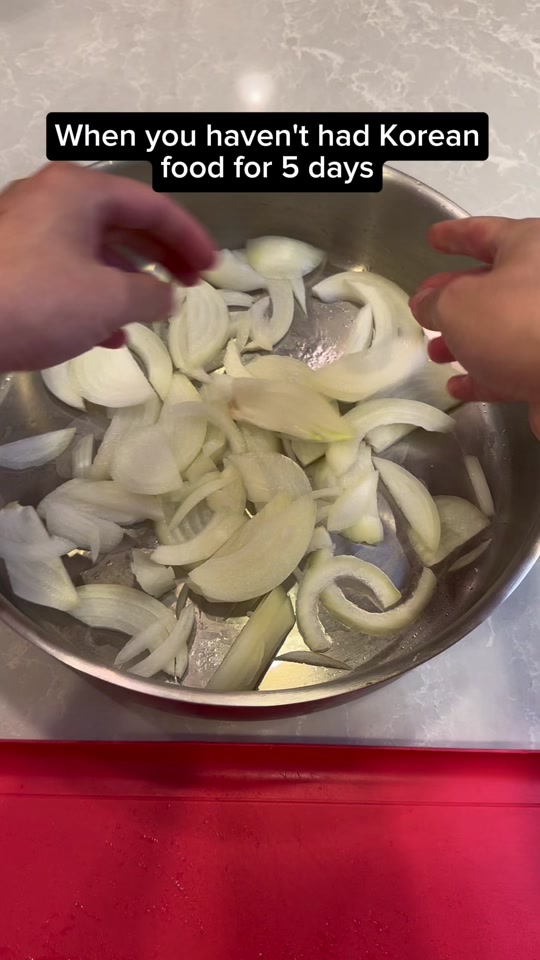
Social
Korean Spicy Beef and Bean Sprouts
A spicy Korean-style stir-fry of thinly sliced meat with bean sprouts, vegetables, and a sweet-savory gochujang sauce.
Made by pov_husband
45 min4 servings
main courseKorean

Social
Beginner-Friendly Napa Cabbage Kimchi
A step-by-step, beginner-friendly kimchi using napa cabbage, a rice slurry, gochugaru and a garlicky-ginger paste. Salted for 90 minutes, left at room temp 24 hours, then chilled; delicious after a few days and best after weeks.
Made by The Korean Vegan
140 min1 large jar (about 6–8 servings)
side dishKorean
Super Easy Kimchi Pickles
My Creation
Super Easy Kimchi Pickles
Quick, Korean-inspired pickled mini cucumbers in a spicy-sweet brine — ready in as little as 2 hours, best after overnight chilling.
135 min1 bag (about 6–8 mini cucumbers)
side dishKorean-inspired

Social
Chinese Velvet Chicken Breast
Tender Chinese-style velvet chicken breast tossed in a savory aromatic sauce, perfect served with steamed rice.
Made by Victor Cong
30 min4 servings
main courseChinese
My Creation
Pad Thai
Prato PrincipalTailandesa
Karê Japonês
My Creation
Karê Japonês
Prato PrincipalJaponesa